
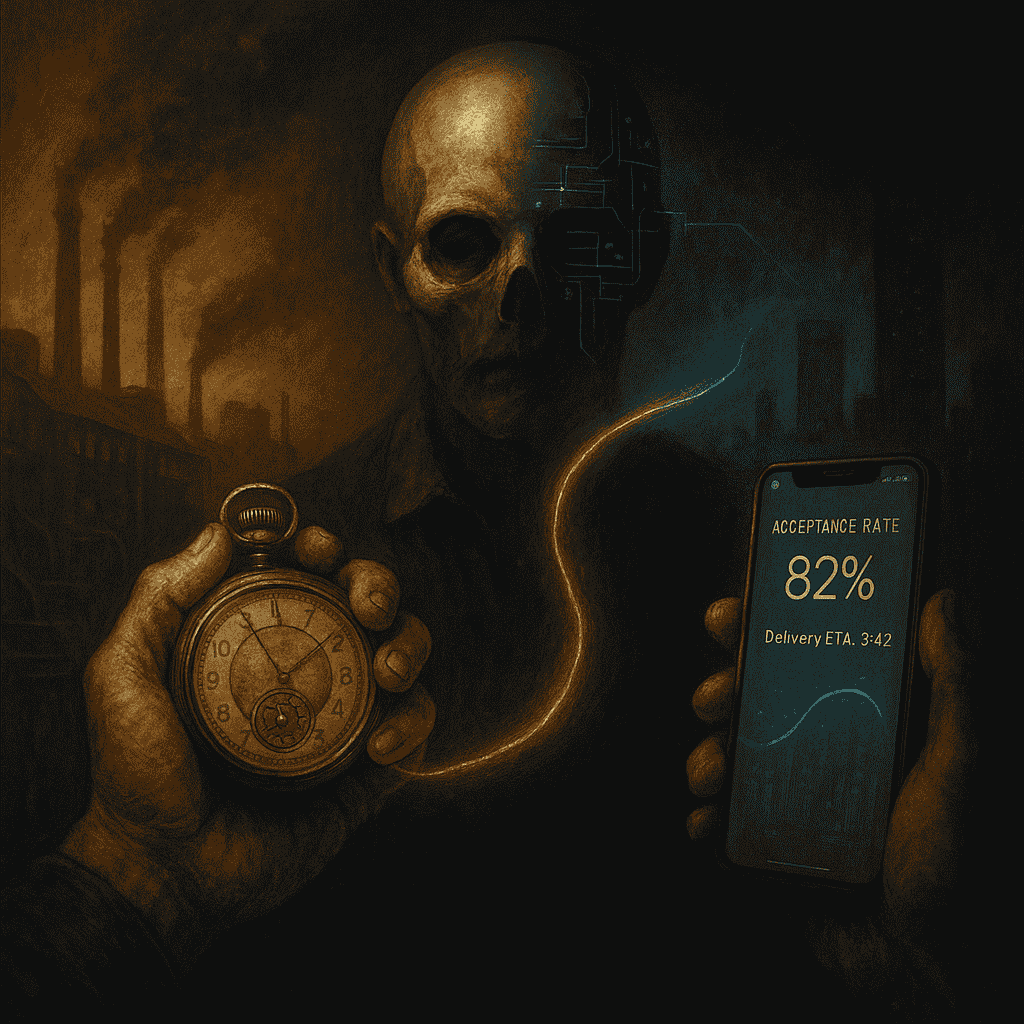
If you’re considering signing up to drive for Uber, DoorDash, or any major gig platform, take five minutes to read this. You are not signing up with one company; you are entering a structural agreement governed by a proxy enforcer you’ve never heard of: Checkr.
This is not about an inefficient algorithm. This is about a Blind Architecture designed to outsource liability and centralize control over your labor, enforcing a single, unforgiving algorithmic identity across the entire gig economy.
Here is what you actually sign up for when you agree to the terms:
1. The Legal Firewall: You Sign Away Your Day in Court
The most critical clause you agree to is the mandatory arbitration provision contained within the contracts of both the platforms and their background check proxy, Checkr.
No Lawsuits, No Class Actions: This clause strips away your right to sue either the platform or Checkr in a court of law. All disputes, from wrongful deactivation to mishandled data, must be resolved through private arbitration.
The Creditor’s Grammar in Action: Arbitration is a private system proven to overwhelmingly favor corporations, severely limiting your ability to gather evidence and recover adequate compensation. The cost of legal sovereignty is borne entirely by the worker.
The Opt-Out Trap: While you can technically retain your rights by mailing or emailing a timely notice to opt out of Checkr’s arbitration clause, this process is buried deep within the fine print, a classic feature of the Blind Architecture.
2. The Proxy Enforcer: Checkr as the Algorithmic Chokepoint
Uber, Lyft, and others use Checkr because it functions as a legal and ethical shield. Checkr is classified as a Consumer Reporting Agency (CRA), placing it under the Fair Credit Reporting Act (FCRA), which creates an intentional division of liability.
The Blame Game: Checkr is responsible for accuracy, but the gig platform is responsible for the adverse action (the deactivation). When you are banned, the platform tells you to contact Checkr, and Checkr directs you back to the platform. This redirection loop is not an accident; it is the fundamental mechanism of control, draining the worker’s time and financial reserves.
Systemic Inaccuracy: This architecture is flawed by design. Checkr has settled multi-million dollar lawsuits over its failure to ensure “maximum possible accuracy,” including cases of reporting false convictions, expunged records, or mismatched identities. You bear the full financial and emotional cost of these errors.
3. The Single, Unforgiving Algorithmic Identity
When you agree to a background check, you create a permanent record that follows you.
Enforcing the Ban: If Uber deactivates you based on a Checkr report, that same flawed report often prevents you from signing up with DoorDash or other services that use the same screening proxy. A ban on one platform becomes a ban from the entire sector.
Arbitrary Rule Changes: Driver forums are rife with accounts of workers with years of perfect service suddenly being deactivated when the platform runs a new check that flags an old misdemeanor, information that was acceptable when they first signed up. The platform retains the arbitrary right to change the standard for your right to work at any time.
Conclusion: The Defense of Sovereignty
The gig economy’s structure is not about flexibility; it is about outsourcing risk and centralizing control through proxies like Checkr. The Algorithmic Feudalism you experience daily is simply the technological execution of the legal architecture you unknowingly signed.
Your labor sovereignty begins with knowledge. You must know your terms and protect the valor da inutilidade, your worth that cannot be quantified or arbitraged by the machine.
Licensing and Use
Open-Source Philosophy: All original conceptual frameworks, definitions (e.g., Blind Architectures, Rationalist Heresy, Vassal Order), and historical syntheses within Unspun Thread are released under a liberal, non-commercial open-source license.
Attribution Required: We encourage, and insist upon, the free use of our ideas, frameworks, and insights by thinkers, students, journalists, and legal professionals worldwide. Attribution is the only cost of use.
Standard Citation: When referencing or utilizing the core theses of this work, simply citing Unspun Thread and the title of the specific article (e.g., The Blind Architectures: Tracing the Historical, Legal, and Sociological Bias Embedded in AI Code) will suffice.
The ideas generated here are for the defense of the valor da inutilidade and the sovereignty of the human mind.
The Continuum Forge – Unspun Thread